

Many homeowners still believe interior design simply means picking out furniture and wall colors, but this view barely scratches the surface. For those investing in properties across Michigan and Florida, understanding that interior design is the art and science of enhancing the interior of a building reveals how much real expertise shapes truly exceptional spaces. This article demystifies interior design by uncovering its artistic, technical, and strategic dimensions that directly impact the comfort, aesthetics, and long-term value of your home.
Table of Contents
- Interior Design Defined: Art, Science, and Misconceptions
- Variations of Interior Design: Residential vs. Commercial
- Core Principles and Features of Successful Designs
- Licensing, Ethics, and Legal Responsibilities in the US
- Risks, Costs, and Common Pitfalls for Homeowners
Key Takeaways
| Point | Details |
|---|---|
| Understanding Interior Design | It combines art and science to create functional and aesthetically pleasing spaces beyond mere decoration. |
| Residential vs. Commercial Design | Different skills are required for residential and commercial projects due to varying complexities and user needs. |
| Core Design Principles | Successful designs balance functionality, aesthetics, sustainability, and user experience for optimal living conditions. |
| Importance of Professional Expertise | Hiring licensed designers ensures adherence to building codes, ethical practices, and effective project management, reducing risks. |
Interior Design Defined: Art, Science, and Misconceptions
Interior design is far more than choosing paint colors and arranging furniture, yet this misconception persists among many homeowners. At its core, interior design is the art and science of enhancing the interior of a building to achieve a healthier and more aesthetically pleasing environment for the people using the space. For affluent homeowners in Michigan and Florida who are investing significant resources into their living spaces, understanding what interior design actually encompasses is crucial to appreciating the value of professional expertise. The discipline combines conceptual development, space planning, site inspections, programming, research, and construction management into a cohesive strategy that transforms how you live within your home.
This is where the misconception about interior design breaks down. Many people conflate interior design with interior decorating, assuming they are the same thing. Interior decorating focuses primarily on aesthetic elements like furniture, textiles, and wall treatments. Interior design, by contrast, involves a multifaceted approach balancing artistic and scientific concepts. When you work with a professional designer, you are tapping into someone who understands building codes, accessibility standards, spatial flow, lighting principles, material durability, and how spaces actually function within the context of real life. A designer reads blueprints, coordinates with architects and contractors, manages construction timelines, and ensures that beauty serves functionality. For a lakefront property in Michigan or a coastal home in Florida, this means understanding how seasonal changes affect your space, how humidity impacts material selection, and how to design interiors that withstand the demands of year-round living while maintaining their sophistication.
The science underlying interior design reflects how professionals approach each project with intention and precision. Modern interior design evolved from instinctive construction methods into a profession requiring knowledge of how humans interact with their environments. This includes understanding ergonomics, traffic patterns, natural light behavior, acoustics, and how color and material choices influence mood and perception. When you work with skilled professionals who understand space planning and design principles, you benefit from research-backed strategies rather than subjective decorating decisions. The art aspect brings creativity, aesthetic vision, and the ability to translate your lifestyle and personality into physical spaces. The science ensures those beautiful spaces are also safe, functional, durable, and genuinely support how you live. For executives in Michigan supporting a demanding lifestyle or those hosting sophisticated gatherings on Florida properties, this balance between art and science makes the difference between a beautiful room and a beautiful room that actually works for your life.
Pro tip: When consulting with an interior designer, ask specifically about their approach to space planning and building codes rather than focusing only on style preferences. This distinction reveals whether they understand the full scope of design or are primarily offering decorating services.
Variations of Interior Design: Residential vs. Commercial
Residential and commercial interior design operate in distinctly different worlds, though both demand equal skill and expertise. Residential design focuses on creating comfortable, functional living spaces tailored to individuals or families, while commercial design addresses larger, often more complex spaces like offices, restaurants, retail stores, and hospitality venues. For affluent homeowners in Michigan and Florida, understanding this distinction matters because it explains why designing a primary residence differs fundamentally from designing a vacation property or investment space. The principles of beauty and functionality apply to both, yet the execution, scope, and regulatory landscape diverge significantly. When you work with a designer on a home project, you are investing in someone who understands the intimate relationship between space and daily living, how materials perform in residential environments, and how to translate your personal lifestyle into physical design.

The complexity and scale of commercial projects introduce considerations rarely encountered in residential work. Commercial interior design must balance brand identity, customer experience, operational efficiency, and strict compliance with safety codes and accessibility standards. A restaurant designer must account for kitchen workflows, customer flow patterns, fire suppression systems, and health department regulations. An office designer addresses employee productivity, collaborative spaces, technology infrastructure, and corporate culture. These projects demand expertise in space planning and building code compliance that goes far beyond aesthetics. Residential design, by contrast, prioritizes personal comfort and the specific needs of your household. A designer working on your home focuses on how you move through spaces, your entertaining style, your daily routines, and the materials that best support your lifestyle. Yet residential projects still require knowledge of building codes, safety standards, and structural considerations, especially in renovation projects where understanding existing architecture becomes critical to the redesign.
The budget structures, timelines, and decision-making processes also differ substantially between residential and commercial work. Commercial projects typically involve larger budgets distributed across multiple complex requirements, longer planning phases, and multiple stakeholders with competing priorities. Residential projects, while potentially significant investments, operate on different financial logic and typically involve fewer decision-makers. For homeowners in Michigan dealing with winter durability requirements or Florida properties managing humidity and salt air exposure, the designer must select materials and systems with these environmental factors in mind. Commercial designers must account for durability across thousands of daily users rather than a single household. Both require precision and attention to detail, but residential design offers the opportunity for deeply personalized spaces that reflect who you are, while commercial design creates functional environments that serve broader business or institutional objectives. The most successful designers often specialize in one category because the skill sets, knowledge bases, and professional networks required for each demand focused expertise.
Here is a comparison of residential and commercial interior design priorities:
| Aspect | Residential Design Focus | Commercial Design Focus |
|---|---|---|
| User Needs | Family lifestyle and comfort | Public interaction and efficiency |
| Code Compliance | Safety for private spaces | Strict public safety requirements |
| Material Selection | Style and personal durability | High-traffic, robust solutions |
| Project Stakeholders | Homeowner and family | Multiple business stakeholders |
| Space Planning | Custom to daily routines | Supports business operations |
Pro tip: If you are considering a significant home renovation or new construction, ask your designer about their residential experience specifically and whether they have worked on projects similar to yours in your climate zone, as this reveals whether they understand the unique demands of your property type and location.
Core Principles and Features of Successful Designs
Successful interior design rests on a foundation of interconnected principles that work together to create spaces that function beautifully and feel intentional. These principles move far beyond surface-level aesthetics. The core elements include functionality, aesthetics, sustainability, and user experience, each equally important to the final outcome. For affluent homeowners in Michigan and Florida, this means understanding that a stunning living room that does not support how you actually entertain falls short of true design excellence. Similarly, a perfectly functional space that fails to reflect your refined taste and lifestyle does not meet the standard of sophisticated design. The best interior designers recognize that every decision serves multiple purposes simultaneously: a material choice must be beautiful, durable, sustainable, and appropriate for your climate and daily use patterns. This integrated approach separates professional design from simple decoration.
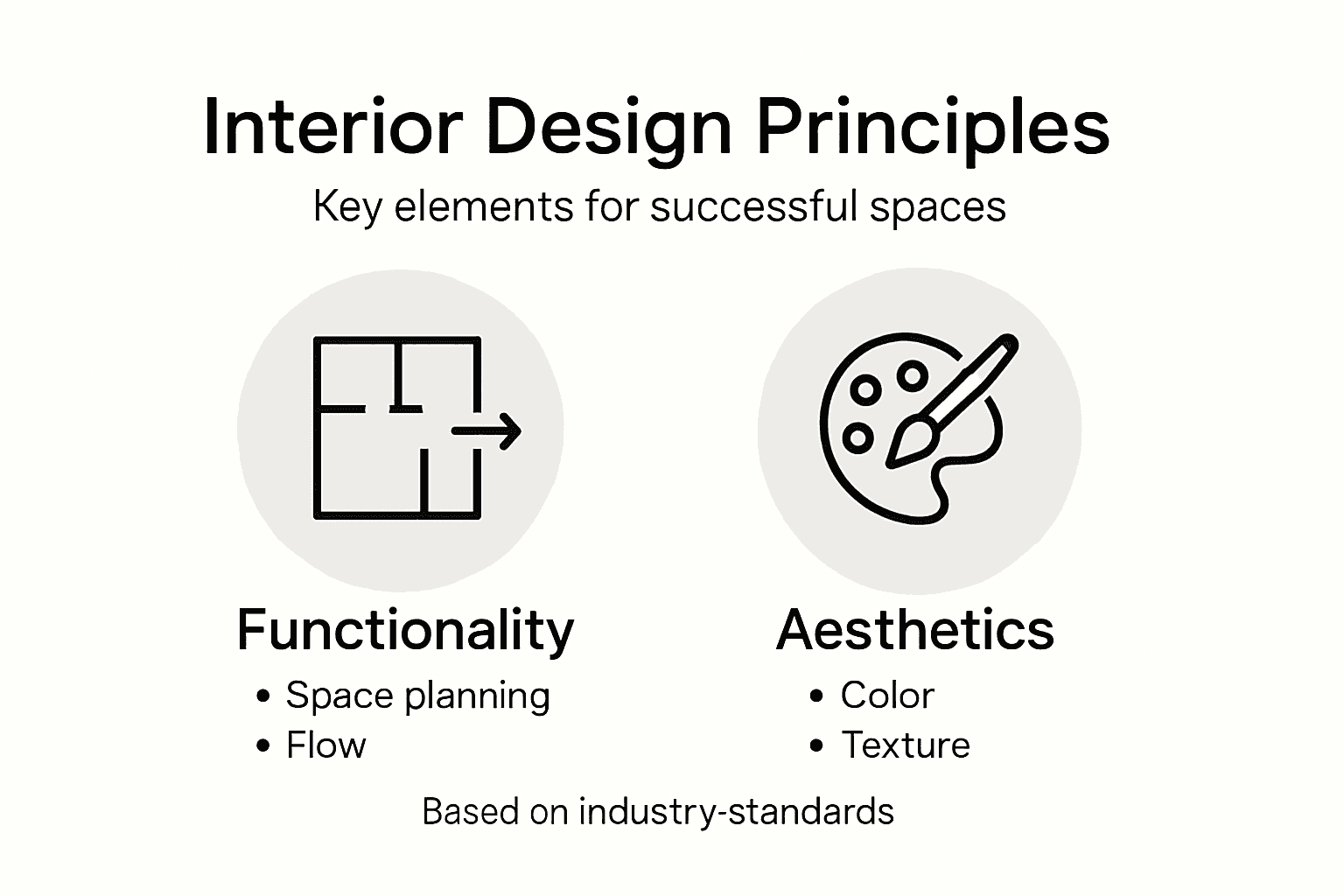
Space planning forms the backbone of every successful project, determining how rooms flow and function within the broader context of your home. Effective space planning considers traffic patterns, furniture arrangement, storage requirements, and how different areas of your home connect to support your lifestyle. A designer analyzes how you move through your kitchen, how your family gathers in living areas, and how your workspace functions if you work from home. Lighting design deserves equally serious attention because it shapes mood, functionality, and even how colors appear throughout your day. Natural light orientation, artificial lighting layers, and fixture placement determine whether a beautiful room actually feels inviting at 7 a.m. or uncomfortable by evening. Color theory influences psychology and perception, creating visual harmony or intentional contrast based on your goals. Material selection combines aesthetics with performance considerations, especially critical in Florida properties where humidity and salt air demand finishes that maintain their beauty under demanding conditions, or Michigan homes where temperature fluctuations affect material stability. When designers integrate space planning, color theory, lighting, and materials with ergonomic considerations, they create environments that enhance both well-being and how you function within those spaces.
Sustainability has evolved from optional luxury to essential practice in professional interior design. This extends beyond choosing certified sustainable materials, though that matters. Sustainability encompasses durability, meaning quality pieces that last decades rather than requiring replacement every few years, which ultimately reduces environmental impact. It includes designing spaces that naturally adapt to their environments, requiring less artificial climate control or lighting. For homeowners invested in properties they plan to enjoy for years or decades, sustainable design choices align with both environmental values and long-term financial logic. A well-designed space using durable, timeless materials requires less renovation and replacement than trend-driven interiors that feel dated within five years. Professional designers approach each project through systematic methodology encompassing research into your needs and preferences, conceptualization of design direction, technical documentation for construction or renovation, and careful project management to ensure execution matches the vision. This structured process ensures that design solutions genuinely meet your goals while satisfying all regulatory and practical requirements.
Pro tip: When discussing your project with a designer, ask them to explain how they address each core principle—functionality, aesthetics, sustainability, and user experience—rather than focusing primarily on style or appearance, as this reveals their depth of understanding and commitment to creating spaces that truly work for your life.
Below is a summary of core interior design principles and their effects:
| Principle | What It Achieves | Why It Matters |
|---|---|---|
| Functionality | Space supports daily activities | Boosts ease of living or work |
| Aesthetics | Visual harmony and style | Reflects taste and brand |
| Sustainability | Resources last and minimize waste | Reduces lifetime costs, eco-friendly |
| User Experience | Enhances comfort and utility | Improves satisfaction and well-being |
Licensing, Ethics, and Legal Responsibilities in the US
The interior design profession in the United States operates within a complex regulatory landscape that varies significantly by state, creating important distinctions between what licensed professionals can do and what unlicensed practitioners may offer. Understanding these regulations protects you as a homeowner and ensures you are working with qualified professionals who meet established standards. Interior design regulation emerged to protect the public and define the profession, establishing clear boundaries around professional qualifications and responsibilities. Currently, the regulatory environment is fragmented across states, with some requiring licensure for certain practice areas while others allow unlicensed practice in residential contexts. This means that when you hire a designer in Michigan or Florida, you need to understand what credentials and legal authority that person actually holds. A designer who calls themselves a professional interior designer may or may not be licensed, and that distinction carries real implications for your project, your protection, and the scope of services they can legally provide.
The regulatory framework includes both title acts and practice acts, each offering different levels of professional protection and restriction. Title acts restrict who can use the title “interior designer” but allow unlicensed individuals to perform interior design work. Practice acts, which exist in some states, allow only licensed interior designers to perform certain functions legally, particularly in commercial design contexts. For residential projects in most states, unlicensed practice remains permissible, but this does not mean all practitioners are equally qualified or accountable. Licensed designers have completed formal education, passed rigorous examinations, and committed to ongoing professional development and ethical standards. They carry professional liability insurance and maintain knowledge of current building codes and safety standards that protect you and your project. When selecting a designer for a significant residential project or any commercial work, verifying licensure status provides assurance that you are working with someone whose qualifications have been independently validated and whose work is subject to professional oversight.
Legal responsibilities in interior design encompass multiple critical areas that directly affect your project and home safety. Designers must ensure that their recommendations comply with applicable building codes, which address everything from electrical safety to structural integrity to accessibility requirements. These codes exist to protect occupants and prevent costly problems that emerge only after construction is complete. Designers also have ethical obligations regarding client confidentiality, fair dealing, and honest representation of their qualifications and experience. Professional ethics require that designers prioritize public safety and client welfare above financial considerations. For your projects in Michigan and Florida, this means a responsible designer will recommend materials and systems appropriate for your climate, even if they cost more or require different design approaches than trendy alternatives. A designer working with integrity will honestly assess whether a proposed solution truly serves your needs or primarily serves their design preferences. When you work with a designer who takes these legal and ethical responsibilities seriously, you gain more than aesthetic expertise. You gain someone who navigates building department approvals, coordinates with contractors to ensure compliance, manages liability, and takes responsibility for the integrity of the work.
Pro tip: Before hiring a designer, verify their licensure status through your state’s professional board, ask about their professional liability insurance, and request references from previous projects similar to yours, particularly regarding how they managed building code compliance and contractor coordination.
Risks, Costs, and Common Pitfalls for Homeowners
Undertaking an interior design or renovation project involves real financial risk and logistical complexity that extends far beyond selecting finishes and furniture. For affluent homeowners in Michigan and Florida, the stakes are particularly high because your properties represent significant investments and you expect results that reflect professional standards and your refined taste. Budget overruns represent one of the most common pitfalls, often resulting from underestimating initial costs, encountering unforeseen structural issues during construction, or making design changes mid-project. Kitchen and bathroom remodels, the most popular renovation spaces, frequently exceed initial budgets because hidden problems emerge once walls are opened. A bathroom that appears fine cosmetically may have underlying moisture damage, plumbing issues, or structural concerns that only become visible during demolition. Similarly, a kitchen renovation that begins as a cabinet and countertop refresh may uncover outdated electrical systems, inadequate ventilation, or structural modifications needed to achieve your design vision. These discoveries, while necessary to address, create budget pressure that catches many homeowners unprepared. Material costs add another layer of complexity in today’s market, where supply chain disruptions and labor shortages directly impact both pricing and timelines. What seemed like a reasonable budget estimate eighteen months ago may no longer align with current market realities.
The financial scope of renovation projects deserves serious planning and contingency reserves. Kitchen remodels average around twenty thousand dollars, but this figure represents only a baseline for projects ranging from modest updates to comprehensive transformations. A high-end kitchen renovation in a luxury home can easily double or triple that figure. Bathrooms, bedrooms, and living spaces carry their own cost profiles influenced by material selections, labor complexity, and the extent of structural changes required. Beyond the direct construction costs, homeowners must budget for permits, inspections, architectural or engineering consultations, and contingencies. A well-planned contingency reserve of 15 to 20 percent of your total budget provides protection against the unforeseen issues that emerge in nearly every renovation project. Professional designers help mitigate this risk by accurately scoping projects, identifying potential problems during the planning phase, and building realistic budgets based on current market conditions and your specific goals. A designer who has managed multiple projects understands where hidden costs typically emerge and can help you allocate resources strategically to achieve the highest impact within your budget constraints.
Beyond budget concerns, homeowners face risks related to contractor selection, project management, and design decisions that fail to deliver your vision. Selecting an inexperienced or unreliable contractor creates cascading problems affecting timeline, quality, budget, and your ability to hold someone accountable when issues arise. Design pitfalls often stem from decisions made without fully understanding how spaces will function or feel once complete. A color scheme that appears stunning on a small paint sample may feel overwhelming when applied to four walls. Furniture layouts developed without considering your actual entertaining style or traffic patterns create spaces that do not work for real life. These costly mistakes happen when homeowners make design decisions independently or work with practitioners who do not invest sufficient time in understanding their needs. Structural surprises represent another category of risk, particularly in Florida properties dealing with moisture and humidity challenges or Michigan homes managing seasonal temperature variations. Materials selected without understanding your climate’s demands may fail prematurely, requiring expensive replacement. Compliance challenges emerge when design decisions conflict with building codes or accessibility standards, necessitating costly modifications to achieve approval. The most significant risk factor across all these categories is insufficient planning. Projects that begin with clear goals, thorough site assessment, realistic budgeting, professional guidance, and careful contractor selection navigate these pitfalls far more successfully than those rushing into construction decisions.
Pro tip: Establish a detailed project budget that includes 15 to 20 percent contingency for unforeseen issues, obtain everything in writing from contractors with specific materials and timelines, and consider professional project oversight if managing multiple trades, as the cost of oversight typically returns itself many times over through preventing costly mistakes and delays.
Experience Interior Design That Truly Works for Your Life
Many homeowners struggle with understanding the full value of interior design beyond simple decorating. The key challenge is finding a design expert who balances artistry with the science of space planning, functionality, and building code compliance. If you want interiors that not only look stunning but also support your lifestyle and stand the test of time, you need a professional who approaches every detail intentionally and thoughtfully. Staci A. Meyers embodies this philosophy of Excellence by Design, creating personalized spaces that reflect your personality and meet your unique needs.
Discover how award-winning design can transform your Michigan or Florida home into a place that harmonizes beauty, durability, and comfort. Whether you seek family-friendly functionality or sophisticated entertaining spaces, explore the depth of design expertise waiting for you at SAM Interiors. Learn more about our thoughtful approach and see a variety of inspiring projects in our Uncategorized Archives – SAM Interiors. Take the first step toward a space that truly serves your life by visiting SAM Interiors today.
Frequently Asked Questions
What is the difference between interior design and interior decorating?
Interior design involves a comprehensive approach that balances aesthetics with functionality, encompassing aspects like spatial planning, building codes, and material selections. Interior decorating, on the other hand, focuses primarily on aesthetic elements such as furniture and textiles.
Why is space planning important in interior design?
Space planning is crucial because it determines how rooms flow and function together. Effective space planning considers traffic patterns, furniture arrangement, and how different areas connect to enhance your daily routines and overall living experience.
How does sustainability play a role in interior design?
Sustainability in interior design involves selecting durable materials that last longer, minimizing waste, and creating spaces that adapt to their environment, reducing the need for artificial climate control. This approach aligns with both environmental values and long-term financial logic.
What should I consider when hiring an interior designer?
When hiring an interior designer, consider their licensing, experience with similar projects, and their ability to address core design principles like functionality, aesthetics, sustainability, and user experience. Verifying their credentials and asking for references can also provide assurance of their professional expertise.