

Every coastal Florida homeowner knows that a house can only truly feel like home when it mirrors your personality, values, and everyday rhythms. Busy social calendars, love for breezy indoor-outdoor spaces, and a deep connection to community make personalized interior design more important than ever. Here, you will discover how intentional design choices rooted in your unique lifestyle and emotional needs can elevate both comfort and sophistication while honoring the spirit of your surroundings.
Table of Contents
- Defining Personalized Interior Design Concepts
- Types of Personalization in Interior Spaces
- The Personalized Design Process Explained
- Essential Elements for Tailored Interiors
- Common Missteps and How to Avoid Them
Key Takeaways
| Point | Details |
|---|---|
| Personalized Design Focus | Personalized interior design aims to reflect the unique personality and lifestyle of inhabitants, creating spaces that support emotional needs and well-being. |
| Types of Personalization | Various personalization strategies include physical, emotional, and cultural elements, allowing homeowners to craft spaces that are functional and reflective of individual narratives. |
| Design Process Structure | A structured design process involves consultation, ideation, prototyping, and iterative refinement to ensure that the final space aligns with the client’s vision and practical needs. |
| Common Pitfalls | Homeowners should avoid prioritizing trends over personal expression and ensure comprehensive planning to create truly functional and meaningful living spaces. |
Defining Personalized Interior Design Concepts
Personalized interior design represents a sophisticated approach to creating living spaces that authentically reflect an individual’s unique personality, lifestyle, and emotional needs. More than simply selecting furniture and colors, this design philosophy centers on crafting environments that resonate deeply with inhabitants. Emerging research frameworks emphasize understanding human behaviors, emotional cues, and individual perceptions as foundational elements of truly personalized design.
At its core, personalized interior design transforms spaces from generic environments into tailored sanctuaries that support specific lifestyle requirements. This approach considers multiple dimensions beyond aesthetic preferences, including functional needs, emotional comfort, and psychological well-being. Coastal Florida homeowners, for instance, might require design solutions that integrate seamless indoor-outdoor living, accommodate entertaining needs, and reflect the region’s unique architectural heritage. The process involves comprehensive assessment of individual living patterns, personal collections, professional demands, and familial dynamics to create spaces that feel intrinsically connected to their inhabitants.
The methodology behind personalized interior design involves several critical components: deep client consultation, comprehensive lifestyle analysis, strategic spatial planning, and meticulous material selection. Designers utilize advanced techniques like mood boarding, spatial mapping, and behavioral pattern analysis to translate abstract client desires into tangible design strategies. These approaches ensure that every design element – from furniture placement to color palette – serves a deliberate purpose aligned with the client’s unique narrative.
Pro Tip: Before beginning any personalized design project, create a comprehensive lifestyle journal documenting daily routines, emotional responses to current spaces, and aspirational living scenarios to provide your designer with rich, nuanced insights.
Types of Personalization in Interior Spaces
Personalized interior design encompasses a diverse range of customization strategies that transform living spaces into deeply meaningful environments. Residential interior personalization involves multiple approaches, from subtle aesthetic modifications to comprehensive spatial reimagining. These techniques allow homeowners to craft spaces that not only meet functional requirements but also communicate their individual narratives, preferences, and emotional landscapes.
The primary types of personalization can be categorized into several key dimensions. Physical personalization includes custom furniture design, tailored color palettes, and strategic spatial arrangements that reflect individual lifestyle needs. Emotional personalization focuses on creating sensory experiences through texture, lighting, and decorative elements that evoke specific feelings or memories. Cultural personalization involves incorporating heritage-inspired design elements, family heirlooms, or artistic representations that connect inhabitants to their roots and personal history.

Each personalization approach requires careful consideration of practical constraints and individual aspirations. Dwelling space adaptations reveal that successful personalization balances aesthetic preferences with functional requirements. For Coastal Florida homeowners, this might mean integrating hurricane-resistant design elements with personal style, creating spaces that are both protective and profoundly personal. The process demands a nuanced understanding of how design elements can be manipulated to support unique living patterns, professional demands, and familial dynamics.
Here’s a comparison of key types of personalization in interior design and their distinctive benefits:
| Personalization Type | Main Focus | Typical Features | Homeowner Benefits |
|---|---|---|---|
| Physical | Function and form | Custom furniture, spatial layout | Greater functionality and comfort |
| Emotional | Sensory experience | Lighting, texture, ambiance | Enhanced mood and wellbeing |
| Cultural | Heritage and identity | Heirlooms, artwork, symbolism | Personal connection and pride |
Pro Tip: Begin your personalization journey by creating a mood board that captures your emotional landscape, including colors, textures, and imagery that genuinely resonate with your personal story and aspirations.
The Personalized Design Process Explained
Personalized interior design unfolds through a meticulously structured approach that transforms abstract client desires into tangible, functional living spaces. Stakeholder engagement strategies play a crucial role in this process, involving collaborative interactions between designers, clients, and domain experts to ensure each design solution authentically reflects individual needs and preferences.
The design process typically encompasses four fundamental stages. Initial consultation involves comprehensive lifestyle assessment, where designers conduct in-depth interviews and spatial analyses to understand the client’s unique requirements. The ideation phase follows, where designers synthesize gathered insights into preliminary design concepts, exploring creative solutions that balance aesthetic preferences with functional demands. Prototyping and visualization come next, utilizing advanced digital tools and physical mockups to help clients preview potential design transformations before final implementation.
Product design workflows emphasize iterative refinement as a critical component of personalized design. This means continuous dialogue and incremental adjustments throughout the project, ensuring that the final design not only meets technical specifications but also resonates emotionally with the inhabitant. For Coastal Florida homeowners, this might involve multiple design iterations that incorporate regional architectural influences, climate considerations, and individual lifestyle nuances, creating spaces that are simultaneously practical and profoundly personal.
Pro Tip: Maintain a comprehensive design journal during your personalization project, documenting your evolving preferences, inspirations, and emotional responses to help your designer craft a truly authentic living environment.
Essential Elements for Tailored Interiors
Tailored interior design requires a sophisticated understanding of fundamental design components that transform spaces from generic environments into personalized sanctuaries. These essential elements work in harmony to create environments that are not just visually appealing, but deeply meaningful and functionally responsive to individual lifestyles. Space, line, form, light, color, texture, and pattern serve as the fundamental building blocks through which designers craft unique narrative experiences.
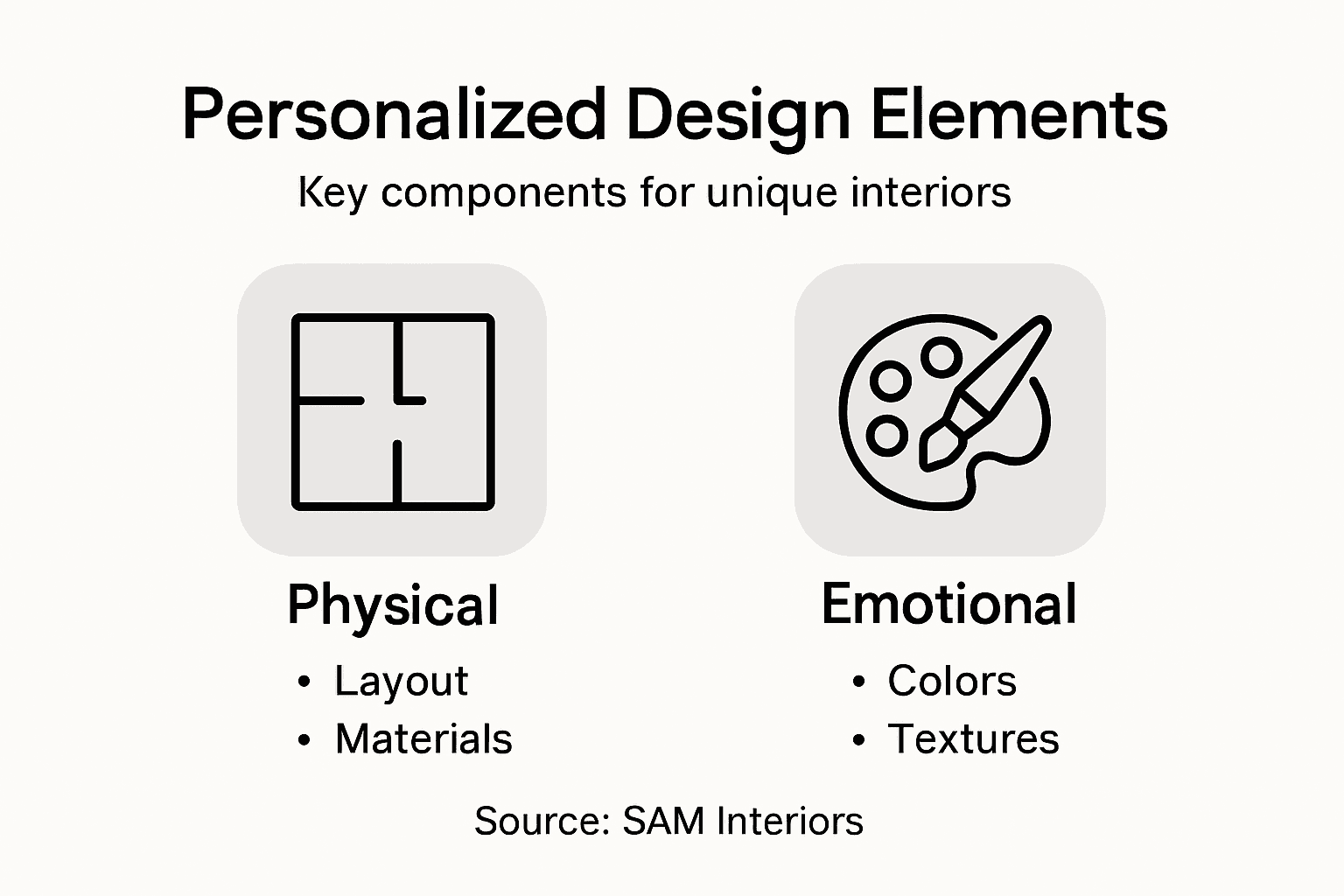
The most critical elements of personalized interior design extend beyond mere aesthetic considerations. Sustainable design principles emphasize integrating materials, lighting, spatial organization, and human factors to create balanced, comfortable environments. For Coastal Florida homeowners, this might translate into designs that seamlessly blend indoor and outdoor living, incorporate hurricane-resistant materials, and reflect the region’s vibrant architectural heritage while maintaining individual style preferences.
Successful personalization demands a nuanced approach to combining design elements. Spatial arrangement becomes a strategic tool for expressing individual personality, with furniture placement, architectural details, and decorative choices telling a unique story. Color palettes can evoke emotional responses, while textures add depth and tactile richness. Lighting plays a crucial role in transforming spaces, creating mood, highlighting architectural features, and supporting specific lifestyle activities. The goal is not merely decoration, but creating an environment that feels authentically and intrinsically connected to its inhabitants.
Pro Tip: Create a design mood board that captures your emotional landscape, including colors, textures, and imagery that genuinely represent your personal narrative and aspirational living environment.
Common Missteps and How to Avoid Them
Personalized interior design requires navigating complex challenges that can derail even the most well-intentioned projects. One of the most prevalent mistakes homeowners make is prioritizing trendy aesthetics over genuine personal expression. Coastal Florida residents, in particular, often fall into the trap of selecting design elements that look impressive on social media but fail to reflect their unique lifestyle and emotional needs.
Critical missteps frequently emerge from a lack of comprehensive planning and self-awareness. Homeowners might rush into design decisions without thoroughly examining their daily routines, functional requirements, and long-term aesthetic preferences. This can lead to spaces that appear visually stunning initially but quickly become impractical or emotionally disconnected. Common pitfalls include overcrowding spaces, neglecting storage solutions, choosing materials inappropriate for the local climate, and failing to create adaptable environments that can evolve with changing life circumstances.
Successful personalized design demands a holistic approach that balances aesthetic aspirations with pragmatic considerations. Homeowners should resist the temptation to replicate entire design concepts from magazines or online platforms without considering their individual context. Instead, they must develop a nuanced understanding of their personal style, functional needs, and emotional connections to their living spaces. This requires honest self-reflection, open communication with design professionals, and a willingness to prioritize authenticity over conformity to external design trends.
For easy reference, here are common pitfalls in personalized interior design and practical solutions to avoid them:
| Misstep | Impact on Home | Solution |
|---|---|---|
| Prioritizing trends | Emotional disconnect | Focus on personal needs |
| Inadequate planning | Impractical layout | Document daily routines |
| Overcrowding spaces | Reduced comfort | Use strategic storage |
| Material-climate mismatch | Damage potential | Select climate-suitable materials |
Pro Tip: Conduct a comprehensive lifestyle audit before starting your design project, documenting your daily activities, emotional responses to current spaces, and long-term personal goals to create a truly personalized interior environment.
Discover the Power of Personalized Interior Design for Your Home
Struggling to create a living space that truly reflects your lifestyle and emotional needs? This article highlights the challenge of balancing aesthetics with personal expression and functional demands. Many homeowners find themselves overwhelmed by trends that fail to resonate on a deeper level or by design choices that do not support their daily routines. Personalized interior design offers a solution by focusing on authenticity, emotional connection, and purposeful space planning to transform your home into a sanctuary that supports who you are.
If you are ready to move beyond generic layouts and fleeting trends, consider working with an expert who understands how to craft tailored environments. Staci A. Meyers, an International Design Award winner featured in Better Homes and Gardens and the Detroit News HomeStyle section, embodies the philosophy of Excellence by Design—offering artistry and detailed care that brings your unique story to life. Explore inspiring examples and insights from SAM Interiors on our Uncategorized Archives – SAM Interiors page and learn how a personalized approach can elevate your home.
Take the next step toward a space that feels genuinely yours by visiting SAM Interiors. Contact Staci today to begin designing a home that supports your lifestyle, honors your history, and fulfills your functional needs before another day passes in a space that does not truly reflect you.
Frequently Asked Questions
What is personalized interior design?
Personalized interior design is a design approach that creates living spaces tailored to reflect an individual’s personality, lifestyle, and emotional needs. It goes beyond just aesthetics and focuses on crafting environments that resonate deeply with the inhabitant’s experiences and preferences.
Why does personalized interior design matter?
Personalized interior design matters because it transforms generic spaces into meaningful environments. It enhances emotional well-being, supports functional needs, and creates a sense of connection between the space and its inhabitants, ultimately improving their quality of life.
What are the key components of the personalized design process?
The key components of the personalized design process include in-depth client consultation, comprehensive lifestyle analysis, strategic spatial planning, and meticulous material selection. These steps ensure that the design accurately reflects the client’s unique needs and aspirations.
How can I ensure my interior design is truly personalized?
To ensure your interior design is truly personalized, conduct a thorough assessment of your daily routines, emotional responses, and aspirations. Keeping a lifestyle journal or mood board can provide your designer with valuable insights that lead to a more authentic and tailored design.